Lawall

Powered Microprocessor Knees: What They Are and Who They Help

Powered microprocessor knees (MPKs) are prosthetic devices are different than standard Microprocessor knees. Powered MPKs combine motors and sensors to actively generate movement for above-knee amputees. Unlike standard MPKs that only control resistance, powered knees propel you forward and take on work your muscles can no longer do as efficiently on their own.

Powered MPKs are approved K3 level ambulators and bilateral amputees. They are particularly helpful for individuals managing muscle fatigue or navigating demanding environments.
Standing up from a chair, stepping off a curb, climbing a flight of stairs. These are moments most people do not think twice about. For many above-knee amputees, though, each one requires deliberate planning, concentrated effort, and significant physical output. Standard microprocessor prosthetics have long helped bridge that gap, but they still place the burden of generating movement squarely on your body.

Powered microprocessor knees are changing that. By actively contributing kinetic energy to each movement you make, these devices take on work your muscles struggle to accomplish. The result is not simply better mechanics. It is a fundamental shift in how you move through your day, your neighborhood, and your life.

At Lawall Prosthetics and Orthotics, our certified prosthetists work closely with patients to evaluate whether a powered MPK is the right fit. This guide walks you through how these devices work, who stands to benefit most, what the clinical evidence says, and what to think through before moving forward.

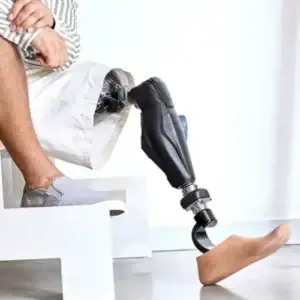
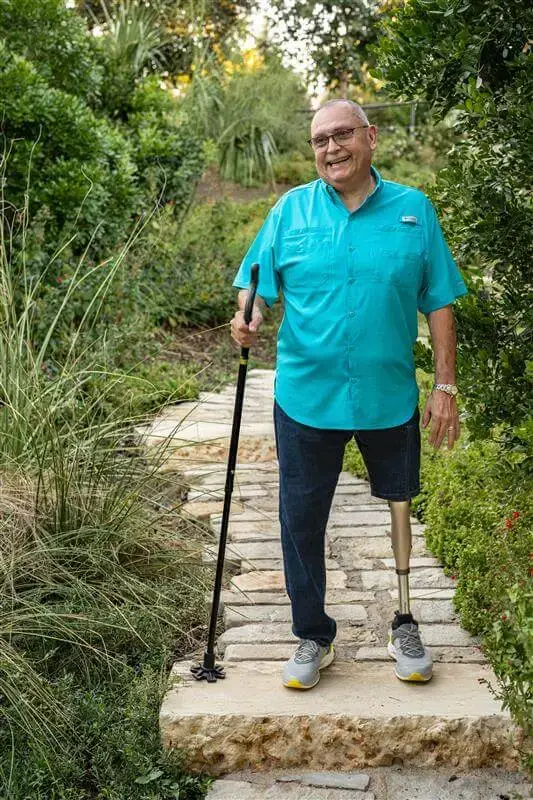
mpk knee sitting
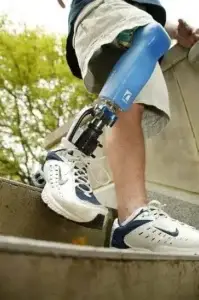
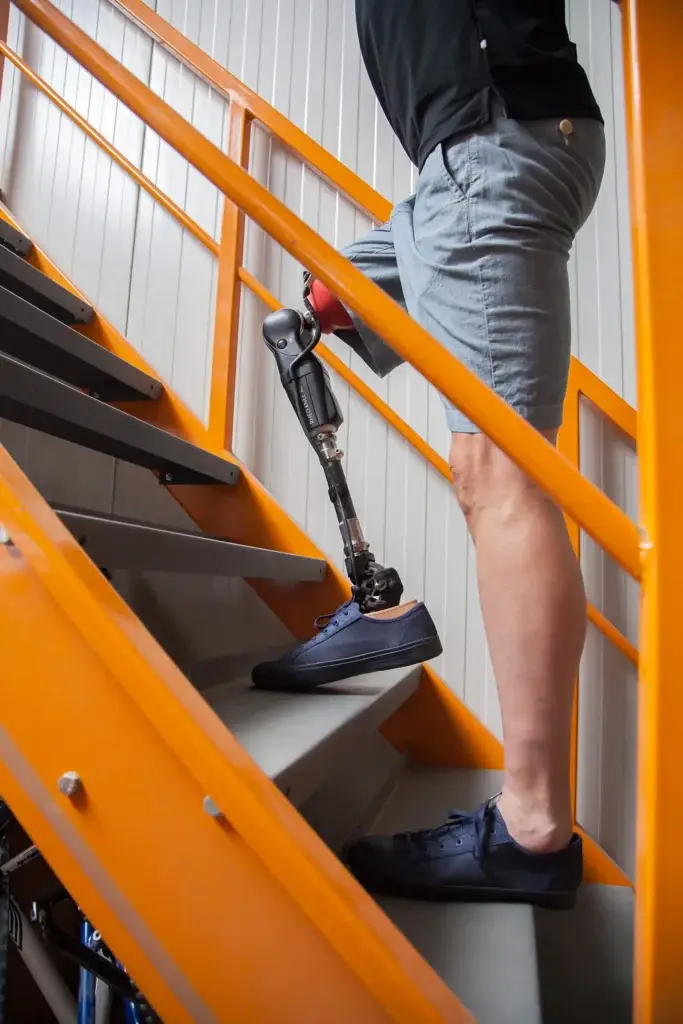
MPK walking down stairs
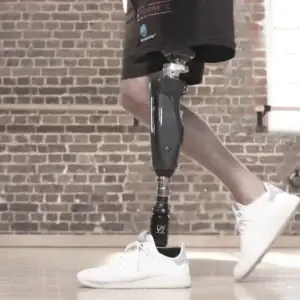
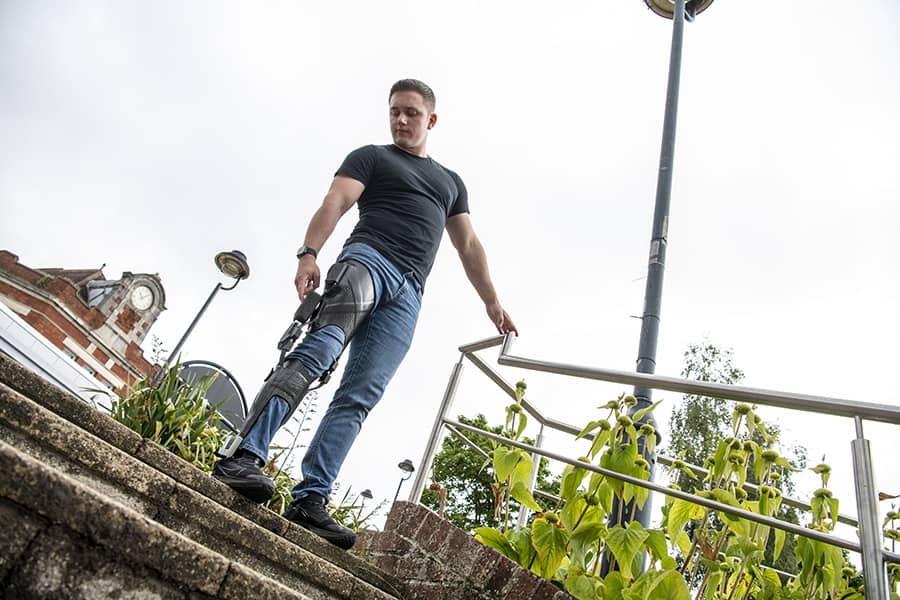
Orion 3 Shot
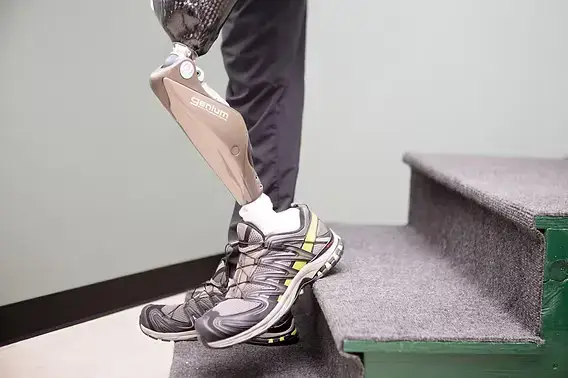
genium MPK

What Makes a Powered MPK Different from a Standard Microprocessor Prosthetic Knee?

The core distinction comes down to whether the device resists movement or generates it.

Standard MPKs use a microprocessor to govern hydraulic resistance. They are highly effective at preventing falls, adjusting to changes in terrain, and improving gait quality. However, they do not supply power to propel you. When you climb stairs or rise from a chair, you are still relying on your hips, your core, and the strength of your sound limb.

Powered MPKs go further. At the center of each device is a motor (in the Ossur Power Knee, for example, this is a harmonic drive motor) that actively extends the knee joint. A network of sensors, including gyroscopes, accelerometers, and load cells, reads your movements in real time. The onboard microprocessor processes that data and responds before you are even consciously aware of the shift. When your weight moves forward to signal a sit-to-stand transition, the motor engages and lifts you upward. The device does not wait for you to initiate. It anticipates.

This is the defining feature of a powered MPK: it restores the kinetic energy that amputation takes away.

Who Benefits Most from a Powered Microprocessor Knee?

Powered MPKs are not a universal solution, but for the right candidate, they offer a level of independence that standard devices simply cannot match. Your care team will assess your Medicare Functional Classification Level, also called your K level and overall health picture to determine candidacy, and the following groups tend to see the strongest outcomes.

K3 level ambulators

Community ambulators who walk at variable speeds benefit from the propulsive assistance a powered knee provides, particularly across slopes, stairs, and longer distances that would otherwise drain energy reserves quickly.

Bilateral amputees

When neither limb retains a biological knee, the energy cost of walking increases substantially. Powered MPKs reduce that burden by supplying active propulsion, supporting more natural gait symmetry and reducing the cumulative strain placed on the back, hips, and residual limbs.

Individuals managing muscle fatigue or joint pain

If you experience chronic fatigue in your sound limb or compensatory pain that has developed over years of asymmetrical movement, active propulsion can help redistribute effort more evenly across your body.

Ottobock Kenevo

What Does the Clinical Evidence Show?

The data behind both powered and standard microprocessor knee technology alike is compelling, and it speaks to outcomes that matter most: safety, function, and cost.

A study published in PubMed examining the provision of microprocessor knees to Medicare K2 beneficiaries found that MPK use across both powered and passive devices reduced the number of individuals experiencing injurious falls by 18.5% (Dobson DaVanzo and Associates). This finding reflects the broader category of microprocessor knee technology, not powered knees specifically. Falls are one of the leading drivers of emergency care, hospitalization, and long-term rehabilitation costs for amputees. A reduction of this magnitude translates directly into better quality of life and fewer medical crises.

On the economic side, the same study found that Medicare beneficiaries using MPKs powered and standard alike generated savings of $1,351 per member per month compared to those using non-microprocessor knees. This figure reflects the broader microprocessor knee category and should not be read as evidence specific to powered knees alone. The adjusted cost difference between the two device types amortizes in approximately 19 months. Over a ten-year period, providing MPKs to eligible K2 users could generate roughly $410.3 million in Medicare cost savings at the national level.

Clinical research on the Ossur Power Knee specifically has also demonstrated measurable improvements in sit-to-stand mechanics and walking symmetry compared to passive microprocessor knees. These are not marginal gains. For patients, they translate into greater confidence at home, reduced compensatory injury risk, and the ability to participate more fully in daily and social activities.

What Should You Think Through Before Choosing a Powered MPK?

A powered knee is a meaningful commitment, and approaching that decision with clear expectations sets you up for success.
 

Weight considerations

The internal motor and battery pack add mass to the device compared to standard MPKs. Your prosthetist at Lawall will evaluate your socket fit carefully to ensure the added dynamics of a heavier system are properly accounted for. A well-fitted socket is non-negotiable for safe and comfortable use.

Battery and charging habits

Powered MPKs require daily charging because the motor actively expends energy throughout the day. If the battery depletes during use, safety defaults engage to prevent falls, but active propulsion features will be temporarily unavailable. Building a consistent charging routine is part of adapting to device ownership.

Training and rehabilitation

Transitioning to a powered knee takes time and guidance. Your prosthetist and physical therapy team will work with you on gait retraining, balance development, and terrain-specific techniques. Users who commit to this process consistently report that the device becomes intuitive far sooner than they anticipated.

The Reho by Ossur

Matching the Right Model to Your Needs – Standard MPKs vs. Powered Options

Not every microprocessor knee is a powered knee, and that distinction matters when weighing your options.

Standard MPKs use a microprocessor to adjust resistance, improve stability, and support a more natural walking pattern without an active motor.

The Kenevo from Ottobock is designed for individuals who need maximum stability at lower activity levels.

The Rheo from Össur adapts to changing walking speeds and terrain, making it a versatile option for a range of users, including first-time MPK wearers.

The Avior from Blatchford incorporates biomimetic technology to provide a smooth, natural walking experience, particularly for new amputees and those progressing through rehabilitation.

The Navi from Blatchford offers intelligent, microprocessor-controlled stability with responsive stance and swing control, helping users confidently navigate everyday activities and varying terrain.

For higher-activity K3 and K4 users, the Genium X4 from Ottobock delivers advanced performance, durability, and customization to support demanding lifestyles. If a fully powered knee is the right fit for your needs, your prosthetist may also discuss options such as the Össur Power Knee, WillowWood Intuy Knee, and BionicM Bio Leg, which use motorized assistance to support movement.

Your Lawall prosthetist will help determine which technology best aligns with your mobility needs, lifestyle, personal goals, and insurance coverage.


Start the Conversation About Powered Knees with Lawall

Powered microprocessor knees represent one of the most significant advances in prosthetic technology available today. They do not simply manage the loss of a limb. They actively restore function, reduce the risk of injury, and give you energy back to spend on the things that matter to you.

At Lawall Prosthetics and Orthotics, our team has been partnering with patients across the region since 1977. We combine nearly five decades of experience with access to the latest prosthetic technology, and we handle insurance navigation alongside clinical care so that your path to the right device is as straightforward as possible.

If you are curious about whether a powered MPK could change how you move and live, contact Lawall today to schedule a consultation with one of our certified prosthetists. The right technology, fitted well and supported properly, can return possibilities you may have stopped expecting.

Frequently Asked Questions About Powered Microprocessor Knees

A powered microprocessor knee is a prosthetic device equipped with a motor, battery, microprocessor, and sensor network. Unlike standard MPKs that use hydraulic resistance to control movement, powered knees actively generate kinetic energy to assist with walking, climbing stairs, and rising from a seated position. Sensors read your body’s movement hundreds of times per second, and the motor responds by driving knee extension when needed.

Medicare coverage for powered MPKs is primarily available to qualifying K3 level ambulators under specific reimbursement codes, including L5827, L5856, and L5859. K2 users may qualify for standard MPKs under certain criteria. Lawall’s team works directly with patients to review their classification, clinical needs, and coverage options.

Adaptation timelines vary depending on your prior prosthetic experience, activity level, and rehabilitation consistency. Most users begin to feel comfortable with basic activities within several weeks, with continued improvement over several months of guided training. Working closely with both your prosthetist and a physical therapist significantly accelerates the process.

Yes. The internal motor and battery components add weight compared to passive MPKs. The difference is manageable for most candidates, particularly with a well-fitted socket, but it is an important factor your prosthetist will assess during evaluation.

The Kenevo from Ottobock is a standard MPK designed specifically for users at the K2 and lower end of K3 mobility level who need maximum stability. It uses a microprocessor to control hydraulic resistance but does not have an active motor. The Ossur Power Knee is a fully powered device with a motor that actively drives knee extension, making it suited for higher-activity users who benefit from active propulsion rather than resistance control alone.

Related Posts

The Flamingo stretch

Why Your Child Needs to Stretch for Healthy Joint Development

As parents, we marvel at how flexible our children seem. Whether they’re learning to walk, climbing jungle gyms, or sitting in positions that make our own knees ache just looking at them, kids often appear made of rubber. However, ensuring they maintain healthy mobility as they grow requires more than just natural youthfulness, it requires attention to Range of Motion (ROM).

Read More
Blatchford Tectus

How Orthotics Can Help Manage Chronic Pain and Improve Mobility

The sound of sneakers hitting pavement, the splash of water against a swimmer’s body, the satisfying crack of a golf ball meeting the sweet spot—these moments of athletic achievement aren’t limited by limb difference. Athletes with prosthetics are redefining what’s possible in sports, proving that determination combined with innovative technology can overcome any barrier.

Read More
Orthotics​

Why Custom Orthotic Design Matters for Your Health

Technological advancement has continued to explode as the decades pass, with something new and exciting growing weekly. The field of prosthetics has not been immune to these improvements, either, seeing significant advancements that improve not only the accessibility of prosthetics but also their capability and safety.

Read More
Scroll to Top