

Lawall

Powered Extension MPKs: Who Can Benefit Most?

Walking shouldn’t feel like an equation you have to constantly solve. For many individuals living with an above-knee amputation, navigating a grocery store aisle or simply standing up from a chair requires immense physical and mental energy. While traditional prosthetics offer stability, they still rely heavily on your own body to generate the force needed to move.
 
Powered extension microprocessor knees (MPKs) are changing that dynamic entirely. These advanced devices actively propel you forward, replacing lost muscle function with robotic power. They give you your life back. If you are exploring your prosthetic options, understanding how powered extension technology works can help you make an informed decision about your mobility.
 
Here, we will break down what powered extension MPKs are, who they are designed for, and how they compare to traditional prosthetic knees.
Below the Knee Prosthetic Legs
Ossur-Rheo-Knee
KENEVO-KNEE-JOINT-LF2
prosthetic-leg-fit-knee-prosthesis-propel-physiotherapy

Identifying the Target Audience

Finding the right support for your body can make all the difference in how you move, live, and feel. Powered extension MPKs are not for everyone, but for specific users, they offer a life-altering level of support.
 
These devices are primarily designed for K2 and K3 level ambulators. If you struggle with the physical exertion required to walk long distances, climb stairs, or rise from a seated position, a powered knee can take on that burden. They are especially beneficial for:

Key Features and Clinical Benefits

Every step you take becomes more confident—because the device actively works with you. The defining feature of a powered extension MPK is its ability to generate motion.
 
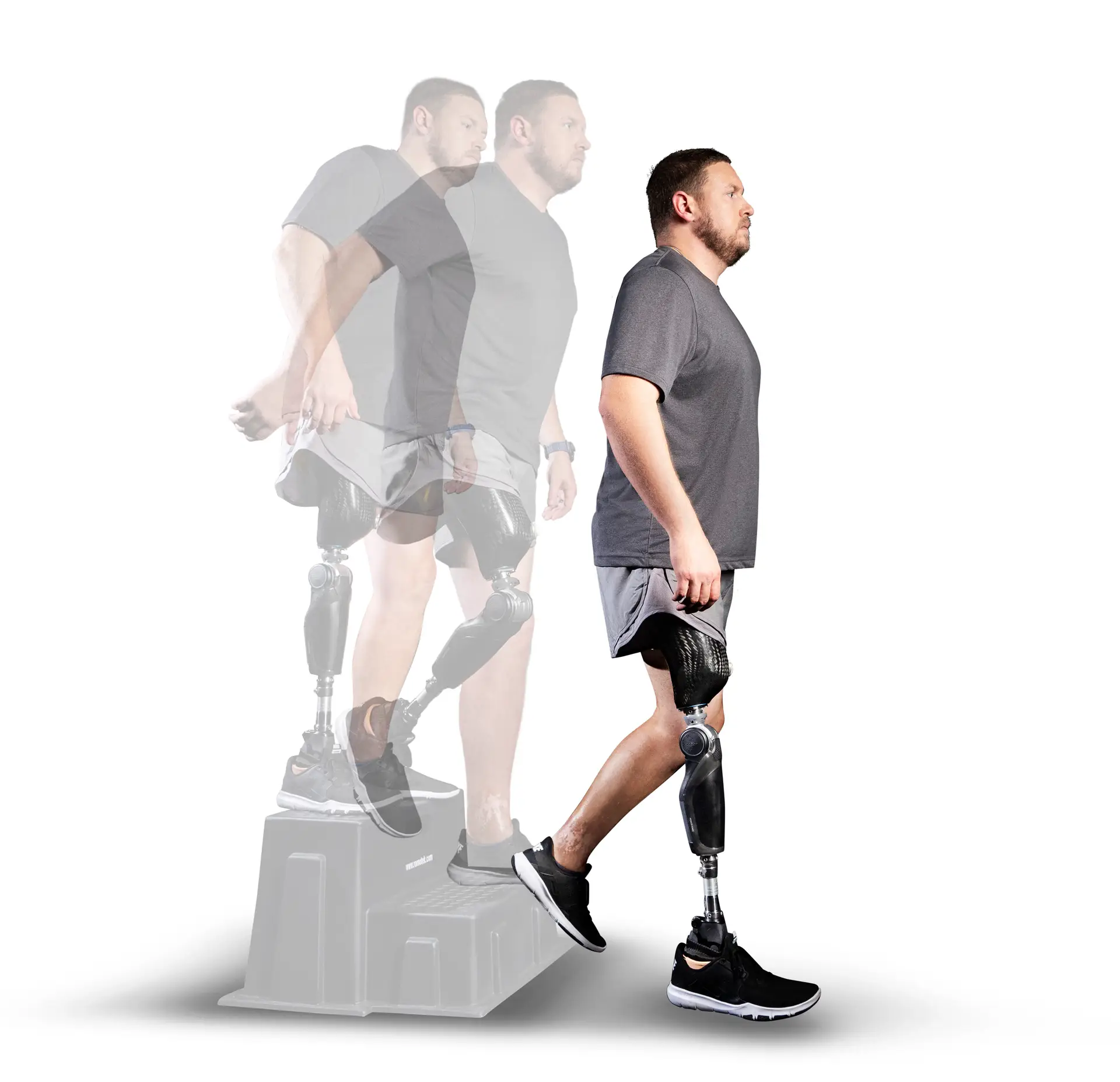
Clinical studies on the Össur Power Knee demonstrate that these devices create measurable improvements in walking and sit-to-stand behaviors. By actively extending the knee joint, the device mimics the function of your quadriceps. This leads to three distinct life outcomes:
Power Knee Studio Paul 01 white e1780330537427

A Deep Dive into the Technology

To understand why these knees feel so different, you have to look inside the casing. Powered extension MPKs rely on a sophisticated blend of motors, sensors, and artificial intelligence to function as an extension of your own body.
 
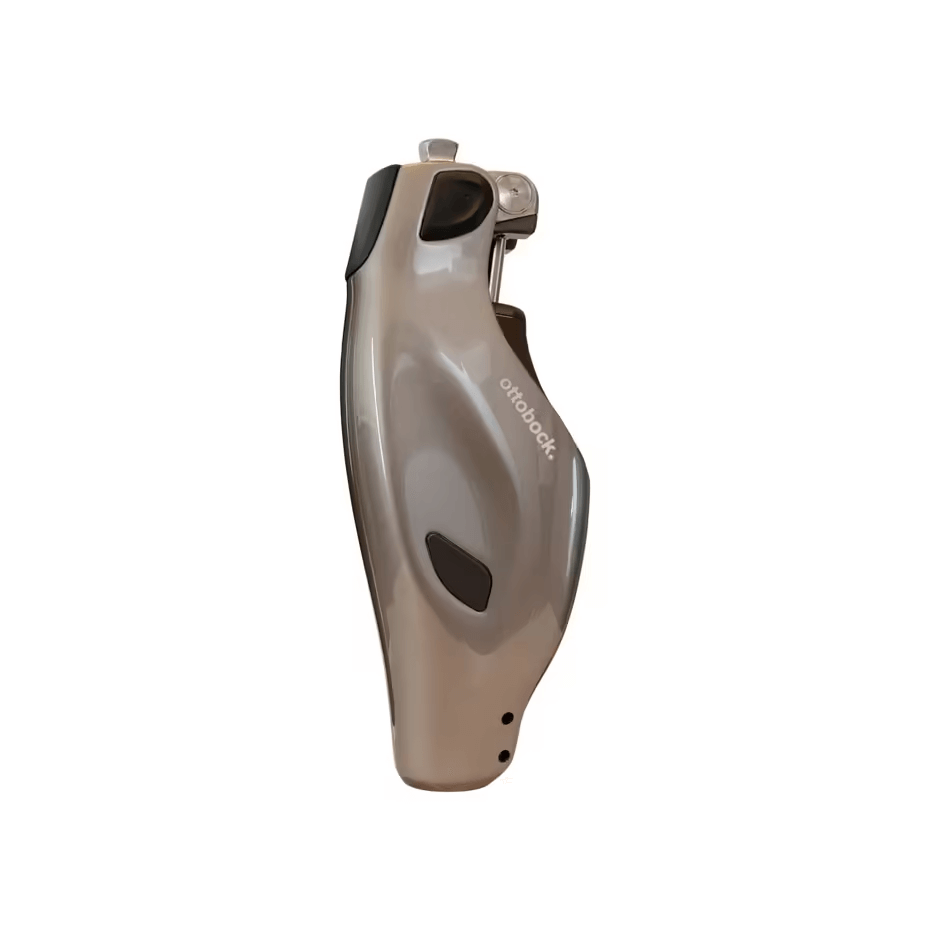
In a device like the Össur Power Knee, a harmonic drive motor acts as the muscle. Meanwhile, a network of gyroscopes, accelerometers, and load cells act as the nervous system. These sensors read your movements hundreds of times per second. The microprocessor, the brain of the knee, processes this data instantly to anticipate your next move. If you shift your weight to stand up, the motor engages and pushes you upward.
 
Furthermore, many of these systems integrate seamlessly with mobile applications. The Össur Logic app, for example, allows users and prosthetists to track progress, access training exercises, and make real-time adjustments.

Traditional MPKs vs. Powered MPKs

When comparing prosthetic knees, the distinction comes down to passive resistance versus active power.
C-Leg

Traditional MPKs

Traditional MPKs, such as the widely used C-Leg (which launched in 1997), are passive devices. They use a microprocessor to control hydraulic or pneumatic resistance. They will stop you from falling, and they adjust to your walking speed, but they do not generate movement. You still have to use your hips and core to swing the leg forward and push yourself up stairs.

Power Knee Studio Paul 02 white

Powered MPKs

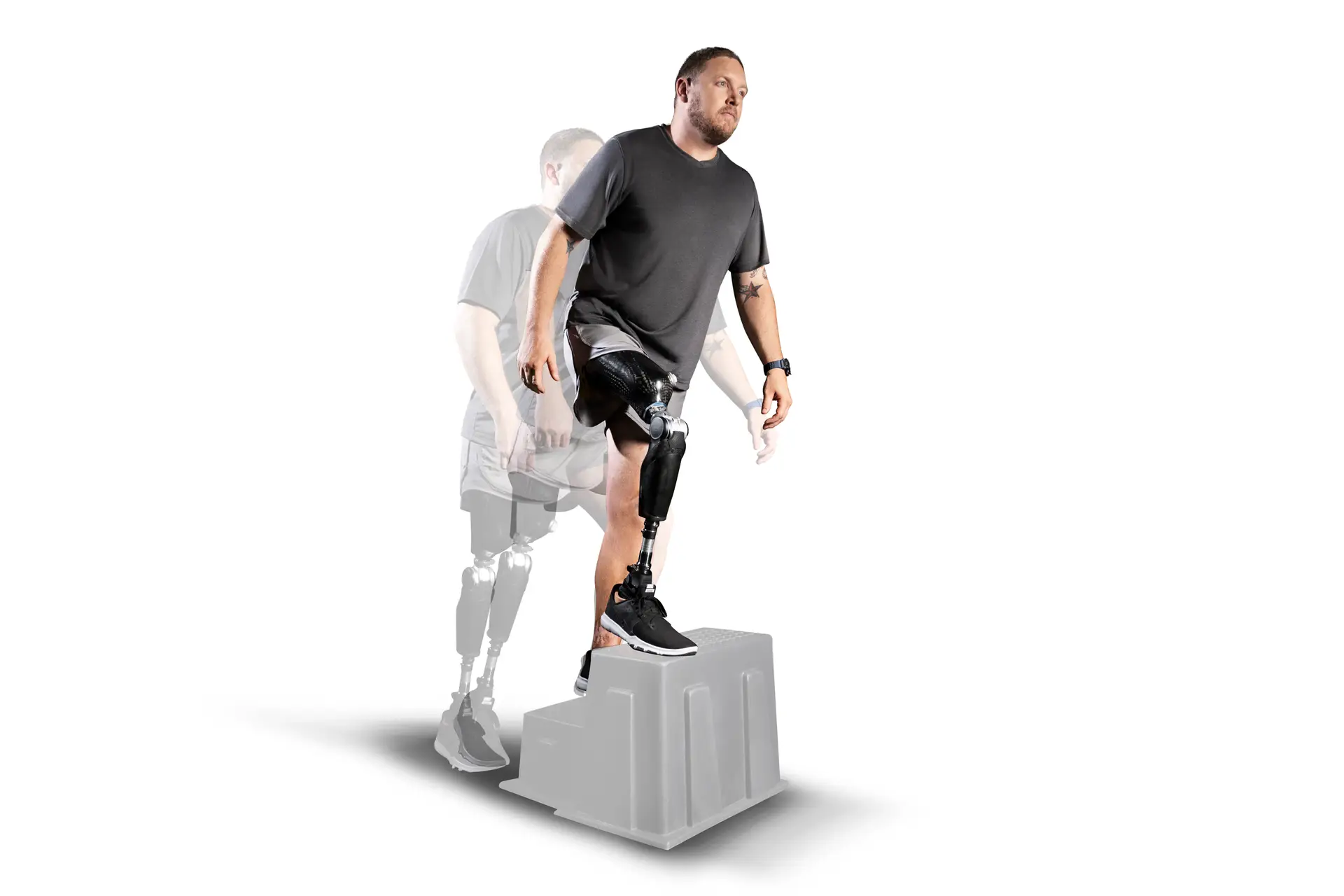
Powered MPKs go a step further. They supply the kinetic energy that was lost following an amputation. While a traditional MPK requires you to pull yourself up a flight of stairs step-by-step, a powered knee actively lifts you up to the next tread.

There are trade-offs to consider. Powered knees are generally heavier due to the internal motor and battery pack. Additionally, while traditional MPKs might last several days on a single charge, a powered knee typically requires daily charging, as it expends energy to move you.
sportsman with mechanical leg getting ready training man sport clothes stretching park summer day sport training concept scaled
Prosthetic leg

Real Stories of Reclaimed Mobility

The true impact of this technology is best understood through the people who use it every day. Users consistently report that the introduction of active power completely transforms their daily routines.
 
Take Josh Sundquist, a well-known Paralympian and motivational speaker. After transitioning to a powered knee, he noted the immediate difference the active motor made. “It powers itself,” he explained. “Once I got that change, I walked out of my front door and walked a mile.”
 
Other users echo this sentiment. Cody, a Power Knee user, shared that after adapting to the device, he woke up one day to find his chronic back pain had vanished. By restoring a symmetrical gait, the prosthesis alleviated the compensatory strain his body had endured for years.

Considerations for Potential Users

While the transition to a powered knee can feel overwhelming, with the right support, it becomes second nature. Before making the leap, there are several practical factors to weigh:

The Future of MPK Technology

The field of prosthetics continues to see significant advancements that improve accessibility, capability, and safety. Looking ahead, powered MPKs will only become more intuitive.
 
We are already seeing the integration of deeper artificial intelligence, which will allow these knees to learn your specific gait patterns and adapt to your unique biomechanics even faster. Additionally, there is a growing compatibility with osseointegration—a surgical procedure where the prosthesis attaches directly to the bone. This eliminates the need for a traditional socket, offering an even more direct transfer of robotic power to your skeleton.

Reclaim Your Freedom Today

Powered extension MPKs represent a monumental shift in prosthetic care. They do not just replace a lost limb; they actively restore lost function, granting you the energy and stability to engage fully with the world around you.
 
At Lawall, we partner with you to find the exact technology that fits your lifestyle. We guide you through the fitting, the training, and the long-term adjustments to ensure you feel confident and capable. If you are ready to explore how a powered microprocessor knee could transform your mobility, contact Lawall Prosthetics & Orthotics today. Together, we can help you stride confidently into the future.

Related Posts

cranial molding helmet Eagles

When to Consider a Cranial Molding Helmet for Your Baby

The sound of sneakers hitting pavement, the splash of water against a swimmer’s body, the satisfying crack of a golf ball meeting the sweet spot—these moments of athletic achievement aren’t limited by limb difference. Athletes with prosthetics are redefining what’s possible in sports, proving that determination combined with innovative technology can overcome any barrier.

Read More
Pediatric Orthotics

Pediatric Orthotics: Supporting Growth and Development

Technological advancement has continued to explode as the decades pass, with something new and exciting growing weekly. The field of prosthetics has not been immune to these improvements, either, seeing significant advancements that improve not only the accessibility of prosthetics but also their capability and safety.

Read More
KENEVO KNEE JOINT LF2

MPKs for K2 Users Improving Mobility and Quality of Life

Technological advancement has continued to explode as the decades pass, with something new and exciting growing weekly. The field of prosthetics has not been immune to these improvements, either, seeing significant advancements that improve not only the accessibility of prosthetics but also their capability and safety.

Read More
Scroll to Top